
Visual supports that support ALL.
Make the next step easier to see. And take.
You know which supports help your students. Stickity makes them easier to add. Find ready-made visual cues, customize the words and use them in your slides, assignments and everyday directions, right alongside the content you’re teaching.
Separate materials aren't the answer. Better materials are.
The way most schools approach IEP visual accommodations is to create different versions — a modified worksheet, a simplified set of directions. That takes time, signals difference to the student, and often reduces rigor. Visual supports don't simplify content. They clarify communication. One document can serve everyone in the room.
A student who doesn't need the visual anchor can still follow along just fine. A student who does need it gets the support their IEP requires. That's universal design.
What Stickity Does
Here's how easy it actually is.
Every sticker tagged by IEP accommodation
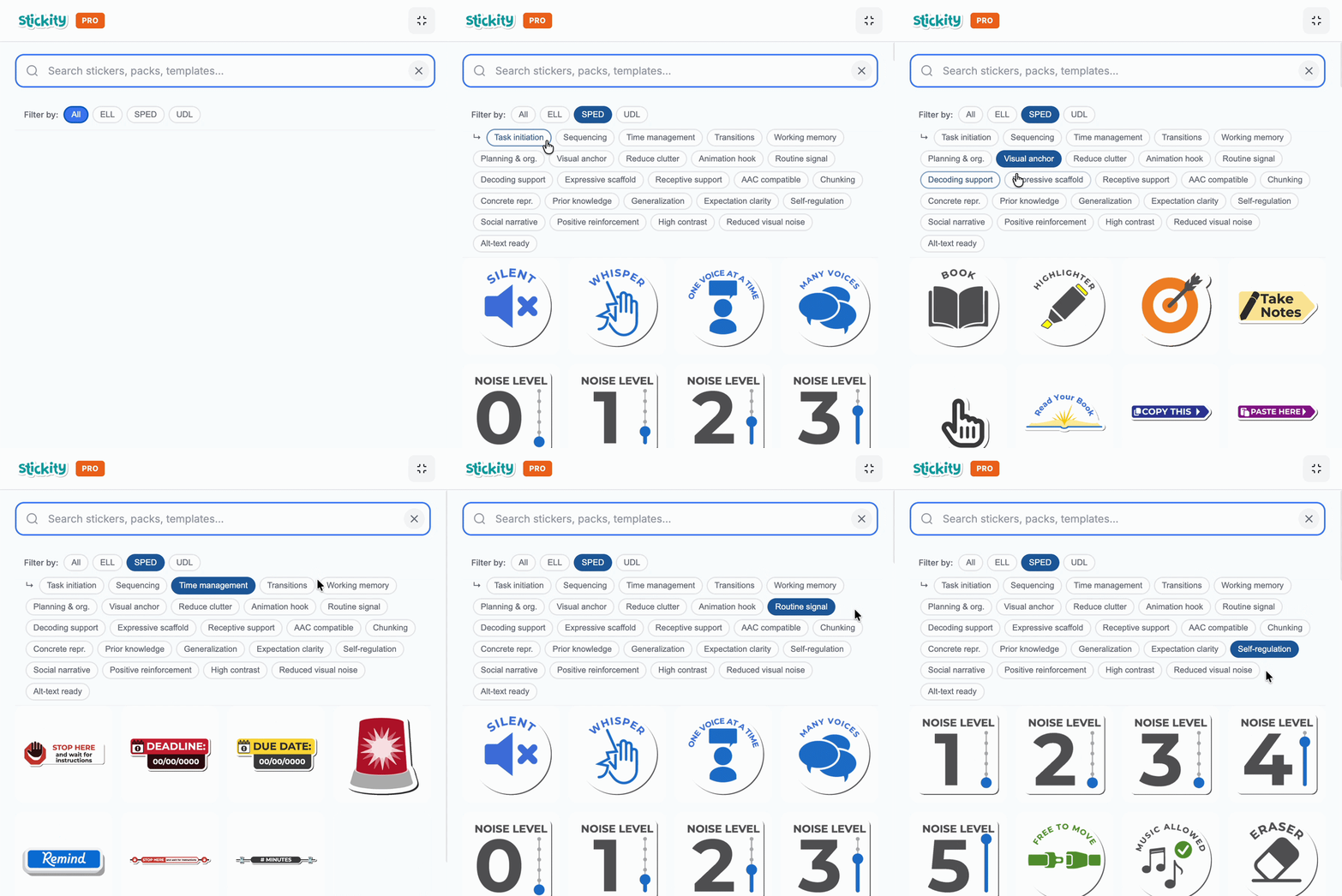
Tap SPED in the filter row and a second row of sub-tags appears: Task initiation, Working memory, AAC compatible, and more.
Tap any tag and the library filters to only those stickers.
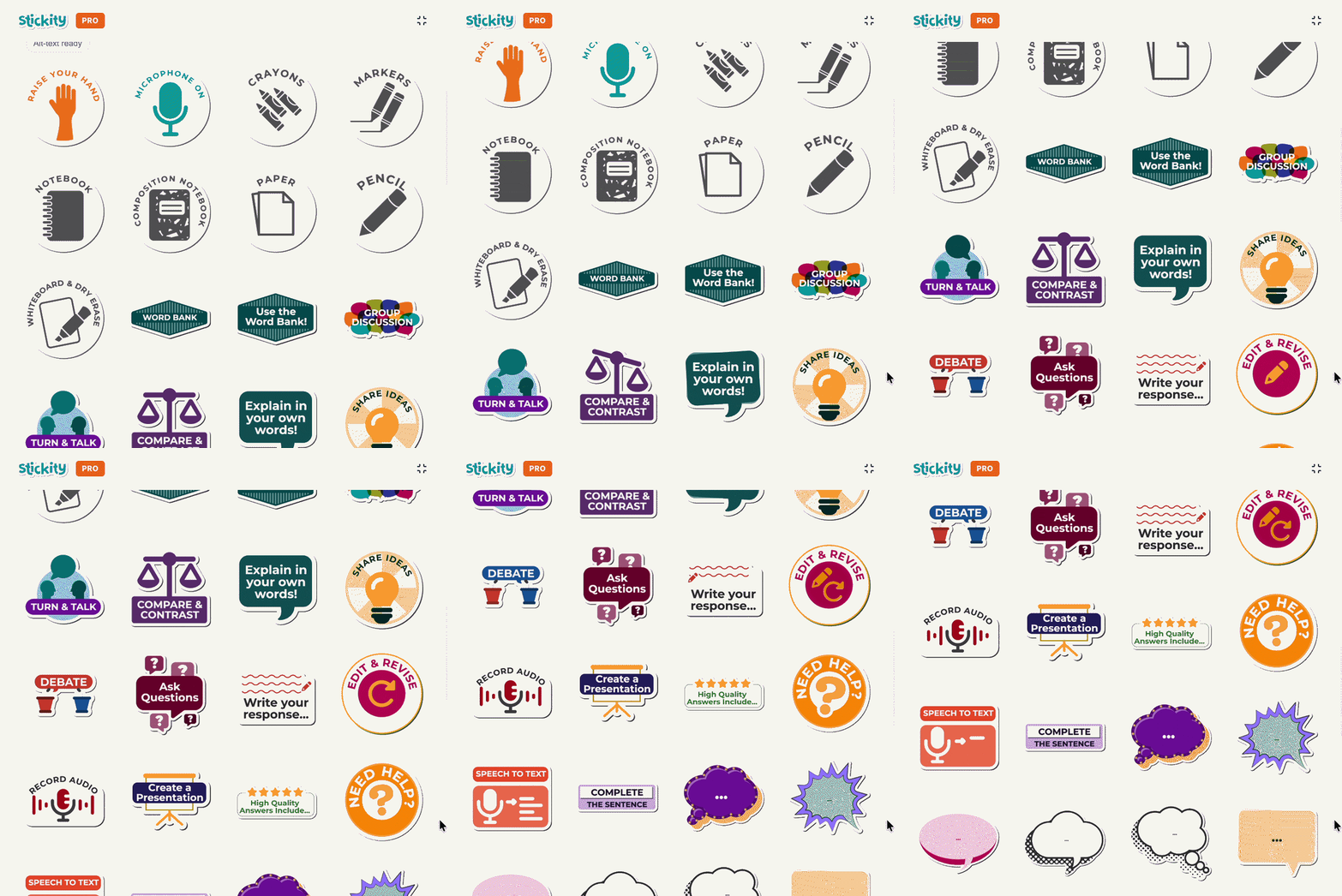
Desired behaviors, stated explicitly and visually
Rather than a list of rules, Stickity lets a teacher show the expected behavior. A student who struggles with abstract language gets a clear, consistent image of what "ready to learn" actually looks like.
And because every graphic has a white outline, it reads on any background: dark slide, colored newsletter, printed page, all good.
Give that wall of text a few landmarks.
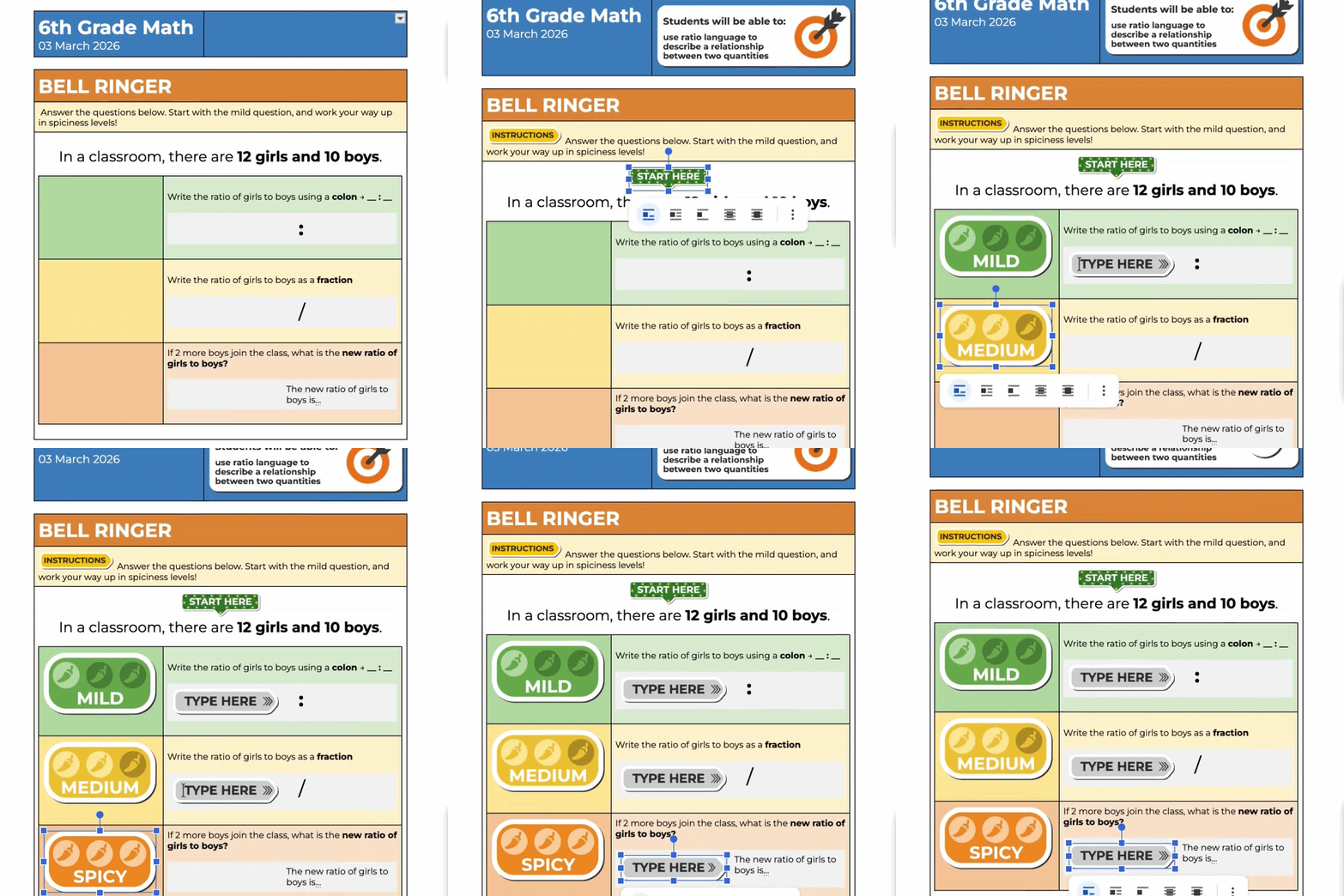
Use dividers, headings and step-by-step visual cues to break materials into clear sections.
Help students see where to start, what belongs together and what comes next, without having to design every cue yourself.
"Since roughly a third of my students are not literate yet, the visual consistency lets them be somewhat independent when checking in on expectations during active moments. Students who can't read or can't engage with too many written instructions can tell at a glance what they are supposed to be doing — which frees both of us up for more important questions."
K-5 STEM Teacher